World Bank Group's Report Says Faster Green Transition Can Boost Bulgaria's Growth, Energy Security
A faster green transition could help Bulgaria create better jobs and strengthen growth and energy security, according to the main findings of the World Bank Group's Bulgaria Country Climate and Development Report (CCDR), titled "Prosperity for Bulgaria: Seizing the Opportunities of the Green Transition and Building Resilience".
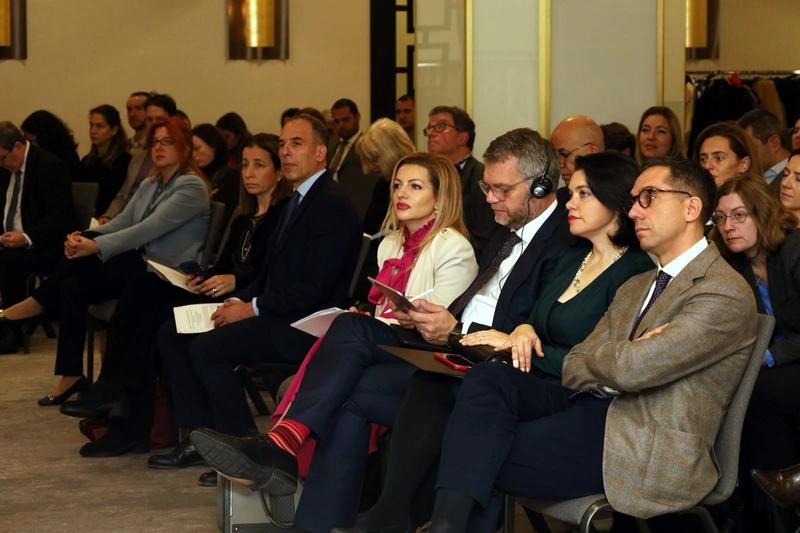
The report was presented in Sofia on November 24 by Joanna Masic, Lead Urban Specialist and Global Lead for Sustainable City Infrastructure and Services at the World Bank Group, and Desislava Nikolova, Senior Economist at the World Bank Group.
Reforms, including decarbonization, could also help bring national incomes closer to the EU average, raise living standards and improve public health. "Transitioning to net-zero emissions by 2050 will require large but manageable investments, while the additional costs - relative to current policies - are expected to bring broader economic gains," the report says. Realizing these gains will depend on implementing reforms in the right sequence, improving delivery and mobilizing private investment. This would require an additional USD 9.7 billion in investment between 2026 and 2050, on top of around USD 7.1 billion under current policies.
In return, the economy could generate an additional 0.6% of GDP annually, energy consumption could fall by 25% in 2050 compared with 2025, and energy dependence could decline to 20% from around 42% in 2024.
Around 68% of the additional investment needed for decarbonization is expected to come from private sources.
The report identifies five priority areas where timely action would have the greatest impact: a financially viable energy transition; transport electrification and a shift to cleaner mobility; energy-efficient building renovation; targeted investment in climate resilience; and better climate governance and financing.