Back
EU Commissioner Mariya Gabriel presents European Commission’s policies on digitalisation before MPs from four parliamentary committees
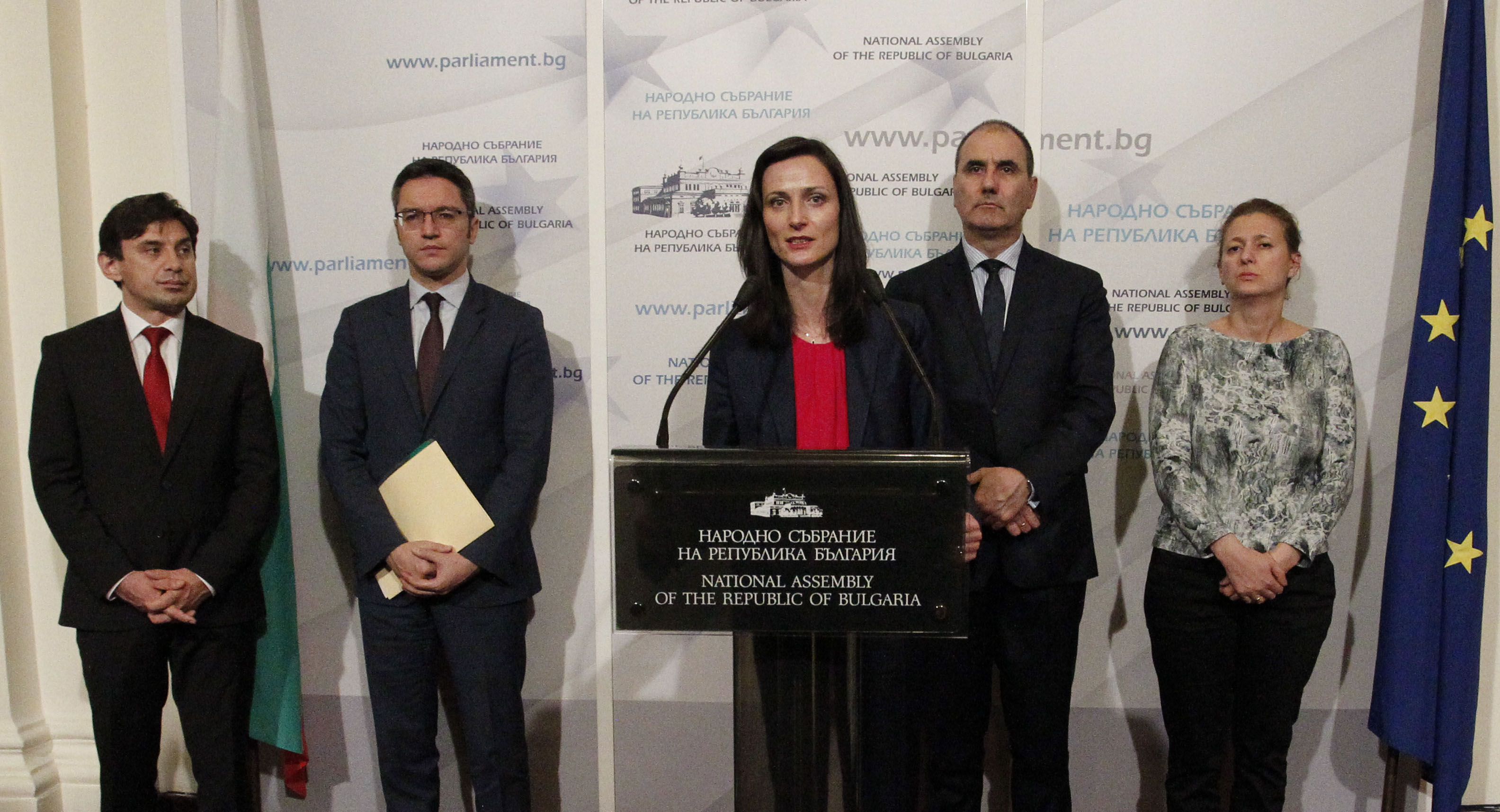
EU Commissioner for Digital Economy and Society Mariya Gabriel presented the European Commission’s policies on digitalisation before MPs from four parliamentary committees. Mariya Gabriel had meetings in Parliament with MPs from the Foreign Policy Committee, the Committee on Internal Security and Public Order, the Committee on European Affairs and Oversight of the European Funds, and the Committee on Transport, Information Technology and Communications.
EU Commissioner Mariya Gabriel thanked the chairs and members of the four parliamentary committees for the opportunity to share ideas, exchange views and outline the challenges to digitalisation. In her words, this will contribute to the successful completion the Bulgarian Presidency of the Council of the EU, and the results will be visible.
EU Commissioner Mariya Gabriel thanked the chairs and members of the four parliamentary committees for the opportunity to share ideas, exchange views and outline the challenges to digitalisation. In her words, this will contribute to the successful completion the Bulgarian Presidency of the Council of the EU, and the results will be visible.
There are 43 initiatives of the European Commission in digital economy and society; 24 of them are legislative, yet negotiations have been concluded for only 6 of them, said EU Commissioner Mariya Gabriel. During the Bulgarian Presidency we will have a unique opportunity to speed up the adoption of some of the 18 legislative initiatives and complete them by the end of 2018. This is the member states’ deadline for completion of the single digital market, she said.
Undoubtedly, digitalisation is part of our everyday life, it changes our way of life, training and work, it is a huge opportunity but also a challenge and risk, said Mariya Gabriel. We can implement wonderful economic reforms and create conditions for business development, but unless we ensure support for the people in the digital transition, we cannot hope for positive results, she said and added that only 37 percent of the active population in Europe had basic digital skills. That is why all national parliaments, governments, the NGO sector and the European Commission should mobilise and work together to increase this percentage, said Mariya Gabriel.
Among the topics discussed with MPs from the Committee on European Affairs and Oversight of the European Funds and the Committee on Transport, Information Technology and Communications were the priorities of the Bulgarian Presidency of the Council of the EU, digitalisation, cyber security, as well as opportunities for the accession of Western Balkan countries to the EU.