Monika Panayotova in a debate on EU technological sovereignty: "Europe must set technological rules, but also create its own technologies"
Technological sovereignty is a matter of economic security, democratic sustainability and the EU's ability to make independent decisions. European investments must also reach small and medium-sized enterprises, start-ups and all Member States.
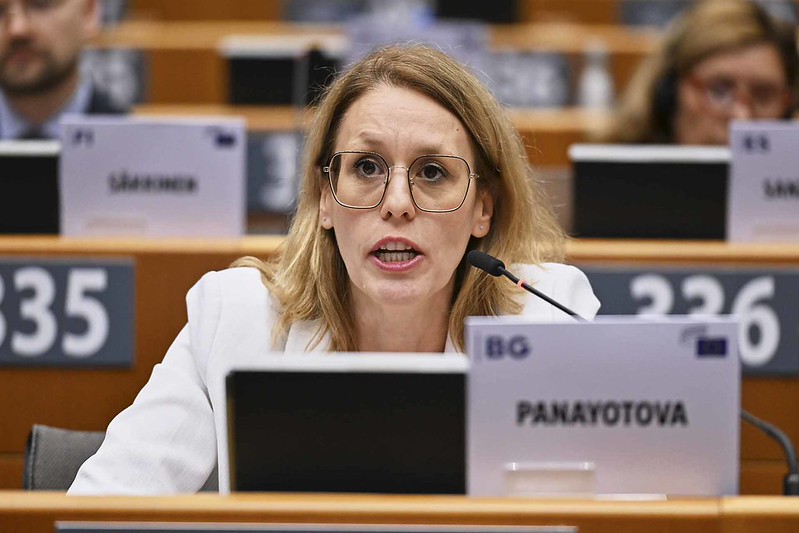
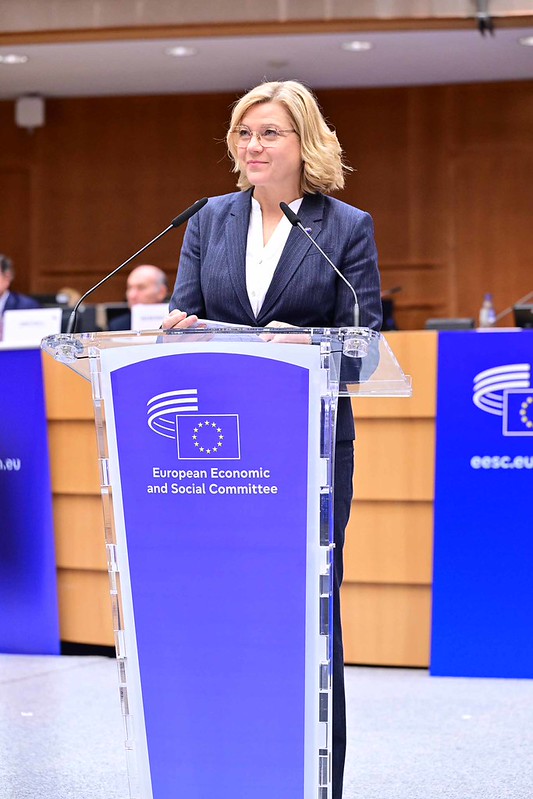
During the plenary debate of the European Economic and Social Committee (EESC) dedicated to the technological sovereignty of the European Union, with the participation of the Vice-President of the European Commission Henna Virkunen, the representative of the BCCI in the EESC and a university lecturer at the UNWE, Dr. Monika Panayotova emphasized the need for Europe to strengthen its own technological capabilities, while protecting competitiveness, security and fundamental human rights.
The debate was linked to two key EESC opinions - INT/1127 on Chips Act 2 and TEN/878 on overcoming digital addictions, protecting workers' rights and data and EU sovereignty in cloud technologies.
" The EU's technological sovereignty is much more than a question of competitiveness. It is a question of economic security, democratic sustainability and the freedom to make independent decisions ," stressed Monika Panayotova.
According to her, technological sovereignty does not mean isolation, but Europe's ability to manage its dependence on critical resources, make its own strategic choices, and cooperate with reliable international partners.
Investments that provide opportunities for the whole of Europe
Panayotova welcomed the European Commission's efforts to promote investments in cloud infrastructure, the development of an ecosystem for semiconductors, computing capacity, data centers and artificial intelligence. However, she noted that European support must be accessible to a wider range of actors and create opportunities for and in all member states.
"European funding and support mechanisms must ensure better access for small and medium-sized enterprises and start-ups, as well as real opportunities for participation for all Member States," she said.
According to her, it is necessary to distribute investments and digital infrastructure in a more geographically balanced way across Europe, avoiding excessive concentration in a limited number of countries and regions, unnecessary administrative burdens hindering SMEs and the potential risk of fragmentation of the Single Market.
Artificial Intelligence: Balancing Innovation, Security and Fundamental Rights
In her speech, Panayotova raised the question of how the EU can become a global technological leader without compromising its values, competitiveness and security.
She highlighted two challenges: how to regulate artificial intelligence without hindering innovation, and how the EU can respond to the growing importance of artificial intelligence in defence.
"We cannot afford to fall behind in the global technological race, nor to allow it to overtake our ability to create legislation through which to manage risks," Panayotova pointed out.
She also stressed the need for the EU to play a leading role in the international debate on the regulation of military applications of artificial intelligence, upholding a human- and human rights-oriented European approach in the face of increasing technological competition and the lack of a common international framework.
Europe must also be a creator of technologies
In conclusion, Panayotova stressed that Europe should not oppose competitiveness to regulation, innovation to security, or technological development to fundamental rights.
" Our task is to turn them into mutually reinforcing priorities. The European Union must strive not only to set the rules of technological development, but also to have the capacity to create technologies and shape its own future ," she said.
This approach places at the centre the need for a strong European technological and industrial base to support the Union's competitiveness, reduce critical dependencies and ensure that the digital transition develops in line with European values.
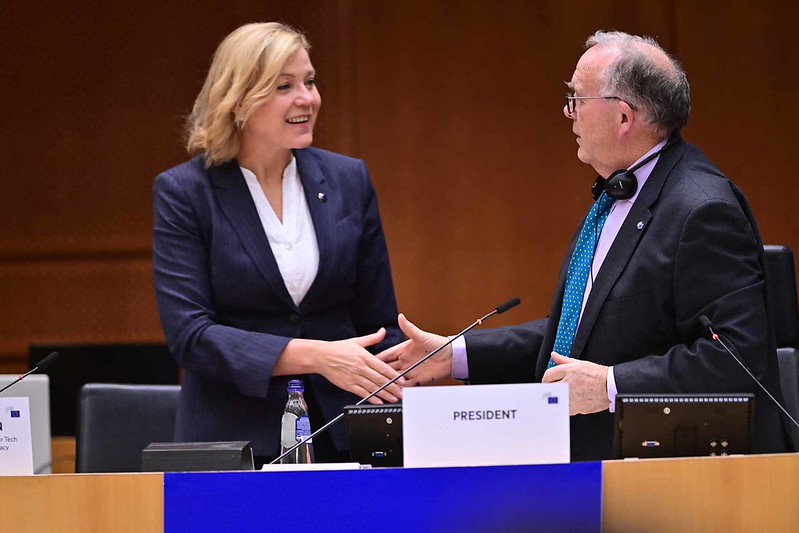
The President of the European Economic and Social Committee (EESC), Seamus Boland, stressed that "technological sovereignty does not mean technological isolation. It means Europe having the capacity, resilience and freedom of choice to defend its values, strengthen its competitiveness and shape its technological future". He said technological progress must contribute to the creation of better jobs and working conditions, while protecting fundamental rights and ensuring the full participation of workers and civil society in shaping the digital transition. "A people-centred approach is needed," said Boland.
Presenting the position of the European Commission, EC Vice-President Henna Virkunen stressed that "technological sovereignty does not mean Europe closing in on itself. It does not mean doing everything ourselves. It means Europeans making their own decisions. Our hospitals, factories, public administrations and democracy should not depend on decisions made elsewhere. Today, this is all too often the case."
For her part, DIGITALEUROPE Director General Cecilia Bonefeld-Dahl warned of the obstacles of creating different national frameworks for the development of technological sovereignty and drew attention to the fact that 98% of enterprises in the EU are small and medium-sized. According to her, Europe must “build barriers where there are risks and keep markets open, promote innovation and develop our own capacities where it is to our advantage.”
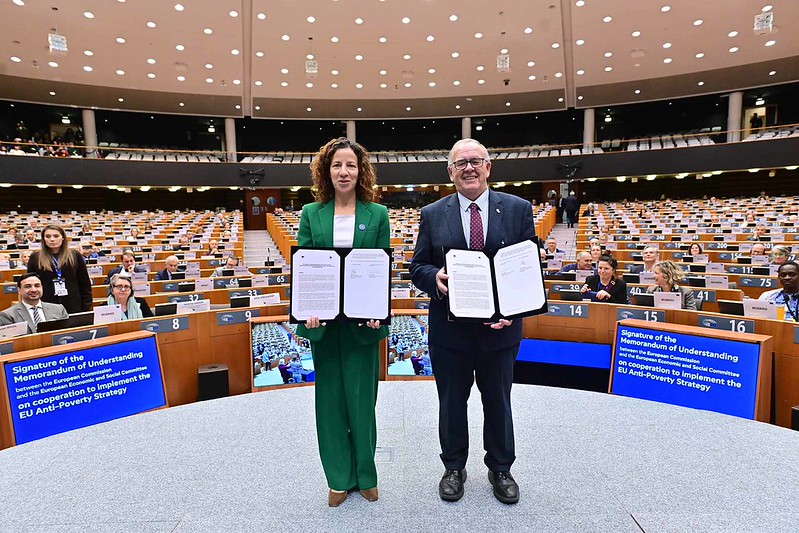
The EESC plenary session was held on 21-22 October 2026, in the European Parliament chamber in Brussels, with the other important debate dedicated to the fight against poverty and the signing of a Memorandum of Understanding between the European Commission and the European Economic and Social Committee on cooperation in implementing the EU's anti-poverty strategy. The document was signed by EC Vice-President Roxana Manzatu and EESC President Seamus Boland during the conference "Eradicate poverty by 2050: fulfilling our collective responsibility", held in the framework of the EESC's October plenary session.
#EESCPlenary