Bulgarian housing market exceeds 4.36 million properties, but almost a third of the population lives in overcrowded homes
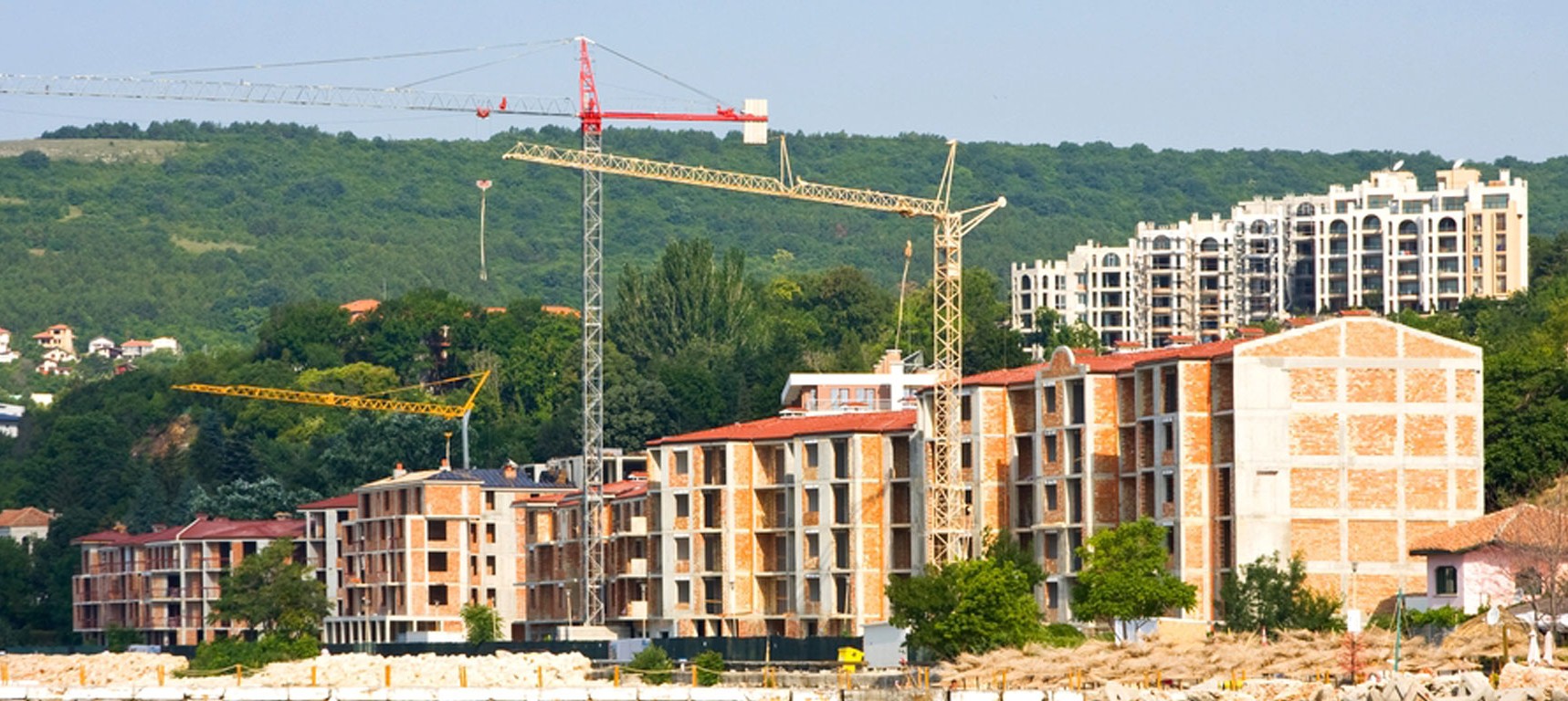
Bulgaria possesses a record housing stock against a backdrop of ongoing population decline, but this does not solve the issues of housing affordability and quality. This is shown by a new analysis from the Institute for Market Economics (IME), prepared by Martin Makelov — an intern at the IME and a student at the London School of Economics. According to the data, at the end of 2025, there were 4,360,805 housing units in the country — over 36 thousand more compared to a year earlier, while the population decreased by 14 thousand people. Thus, there are 679 housing units per 1,000 people, yet property prices continue to rise due to the sharp mismatch between the places with available housing stock and the areas where demand is concentrated.
At the end of 2025, the housing stock in Bulgaria reached 4,360,805 units — 36,612 more than the previous year, while the population decreased by 14,153 people. Consequently, there are now 679 housing units per 1,000 people. Despite this, prices continue to rise rapidly, and nearly a third of the population lives in overcrowded homes. The reason for this contradiction is a severe geographic mismatch in the housing stock: a large portion of existing homes are located in depopulating regions, while the growth of the stock and demand are concentrated in only a few regional centers.
We have many housing units, but poor living conditions
In the OECD's latest comparison, Bulgaria had the highest number of housing units per 1,000 people in the EU — around 620, compared to an average of approximately 515 for the Union. Croatia and Italy ranked after Bulgaria. It should be noted that for these statistics, the OECD used the number of housing units from Census 2021, but compared them against population values from previous censuses, which significantly overestimated the number of residents in Bulgaria. That is, the actual number of housing units per 1,000 people was even higher, at approximately 654, if using the final population count from Census 2021.
In addition to having a large housing stock, Bulgaria also has a high rate of homeownership — 86.1% of Bulgarians live in owner-occupied households, significantly higher than the EU average and Western European countries. However, this does not translate into good housing quality and affordability. One of the most serious issues remains overcrowding — last year, 32.5% of Bulgarians lived in homes with an insufficient number of rooms for the household size, almost double the EU average (16.8%). Nevertheless, there has been a noticeable improvement over the past few years: the proportion of people in overcrowded housing has decreased by about 15 percentage points compared to 2010, one of the largest drops in the Union. This decline coincides with a decrease in average household size, with new construction likely contributing as well. The proportions of people unable to keep their homes adequately warm (16.1% in 2025) and those with arrears utility payments (18.2%) have also decreased significantly over the last few years, but remain among the highest in the EU.
Net growth of the housing stock is predominantly urban and heavily concentrated
From the end of 2022 to the end of 2025, the housing stock increased by a net total of 78,149 units, or 1.82%. During the same period, the population decreased by approximately 24 thousand people, or 0.38%. Consequently, the number of housing units per person is growing simultaneously due to the expansion of the stock and the shrinkage of the population. In 2025, cities accounted for 33,712 units of the total net increase in housing stock, or 92%. From the end of 2022 to the end of 2025, 87% of the net increase occurred in cities. However, the ratio of housing to people in villages is significantly higher — 814 units per 1,000 people, compared to 631 in cities. The higher ratio in villages is due to their depopulation: between 2022 and 2025, almost all (96%) of the population decline was concentrated in villages. However, this does not mean there is a large supply where demand is strongest: for example, in the towns of Vidin Province, the ratio is 789 per 1,000 people, but it is 601 in Sofia (capital) and only 554 in the towns of Plovdiv Province.
The increase in the housing stock during 2022–2025 was also concentrated in just a few provinces: nearly 74% of it occurred in Sofia (capital), Burgas, Plovdiv, and Varna. During the same period, the population grew only in these four provinces and in Kardzhali. In 26 out of 28 provinces, the housing stock grew faster than the population, with the exceptions being Kardzhali and Burgas. In Kardzhali Province, demographic pressure was the highest — there, housing units per 1,000 people fell from 579 in 2022 to 553 in 2025.
Abundant housing is a sign of depopulation
In many of Bulgaria's depopulating provinces, the high housing-to-population ratio does not indicate an abundance of active supply and new construction, but rather a housing stock that is partly vacant, difficult to maintain, or located far from places with demand. Part of the explanation lies in the high proportion of vacant homes — in Census 2021, they accounted for about 38.9% of the housing stock. This figure was almost twice as high as the EU-wide share in the same year (19.7%) and the second-highest in the Union after Croatia. Naturally, not all of these are empty or available on the real estate market, as they include seasonal properties and second homes.
The accumulation of low-demand properties in shrinking municipalities can have negative structural consequences. For owners, housing becomes a less liquid asset since there are few potential buyers. The large price gap compared to growing cities can also restrict labor mobility: selling a property in a depopulating area will far from suffice to purchase a home in a growing area. Furthermore, some of these properties are in such poor condition that they cannot be used as collateral for a mortgage.
Prices rise despite the large housing stock
Overall, the data does not describe a single national market, but rather highly geographically fragmented markets. New supply is concentrated in a few growing and liquid hubs, while a large portion of the existing stock remains in depopulating areas with weak demand. Nationally, real estate prices continue to rise rapidly: from the end of 2022 to the end of 2025, the nominal house price index (measuring actual closed transactions) increased by 47%, with relatively higher growth in Sofia, Varna, and Burgas. In the first quarter of 2026, property prices increased by 6.2% compared to the previous quarter — the highest increase in the EU, and more than 5 times higher than the Union average (1.2%). This price growth is taking place against the backdrop of extremely rapid growth in mortgage lending. By the end of June, the value of housing loans reached 18.7 billion euros — a 26.4% increase compared to last year.
Different markets require different policies
The data shows that improving housing conditions requires different solutions in different regions. In growing cities, for example, predictable construction regulations and adequate planning and financing for required infrastructure are needed. Additional supply can also be generated by renovating and returning usable vacant homes to the market. In depopulating municipalities, an assessment of the local stock can be carried out, followed by repurposing usable buildings and demolishing hazardous, non-restorable structures. To achieve this, municipalities need access to reliable data on the condition of the stock and greater financial autonomy to direct resources according to local priorities.
Author: Martin Makelov, Institute for Market Economics (IME)