A bilateral meeting between Bulgaria and Greece, with significant institutional and business representation, was held in Sofia
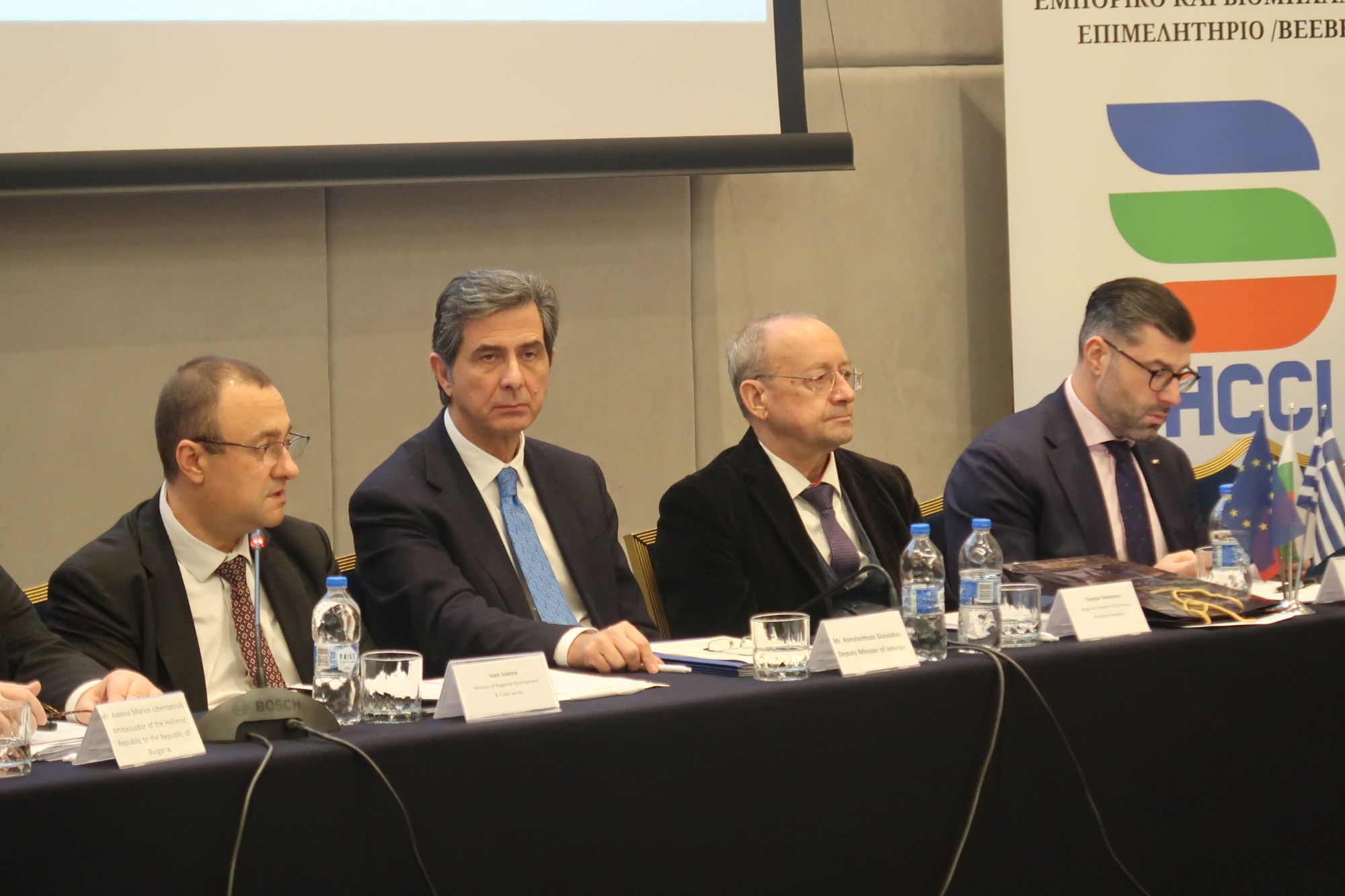
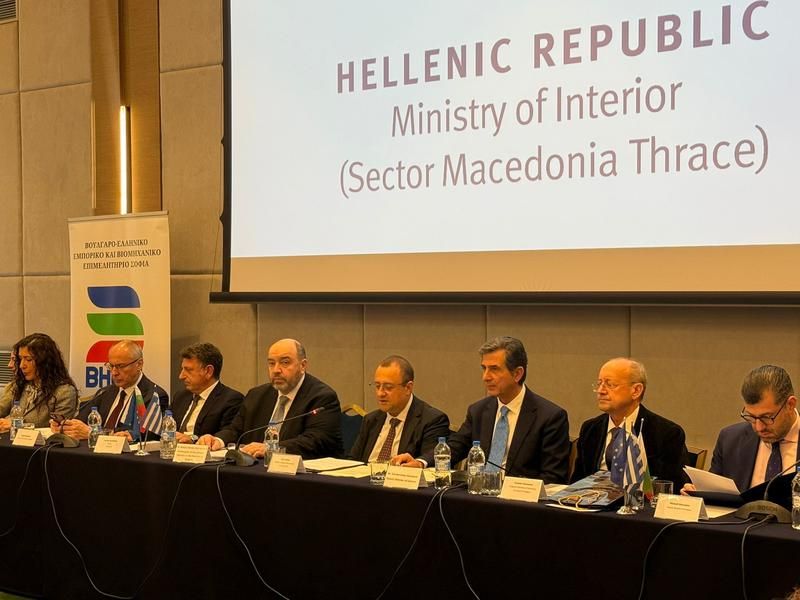
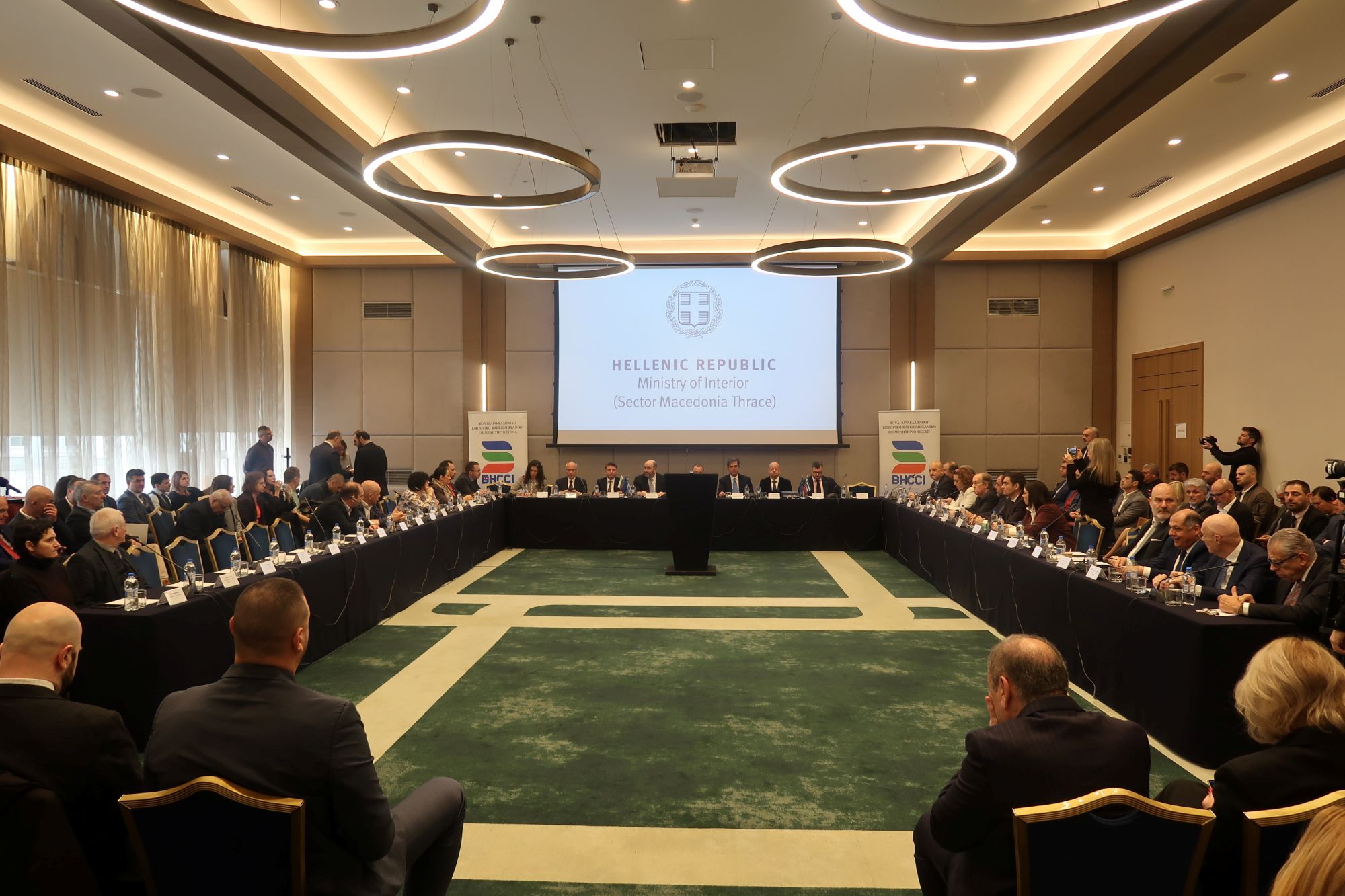
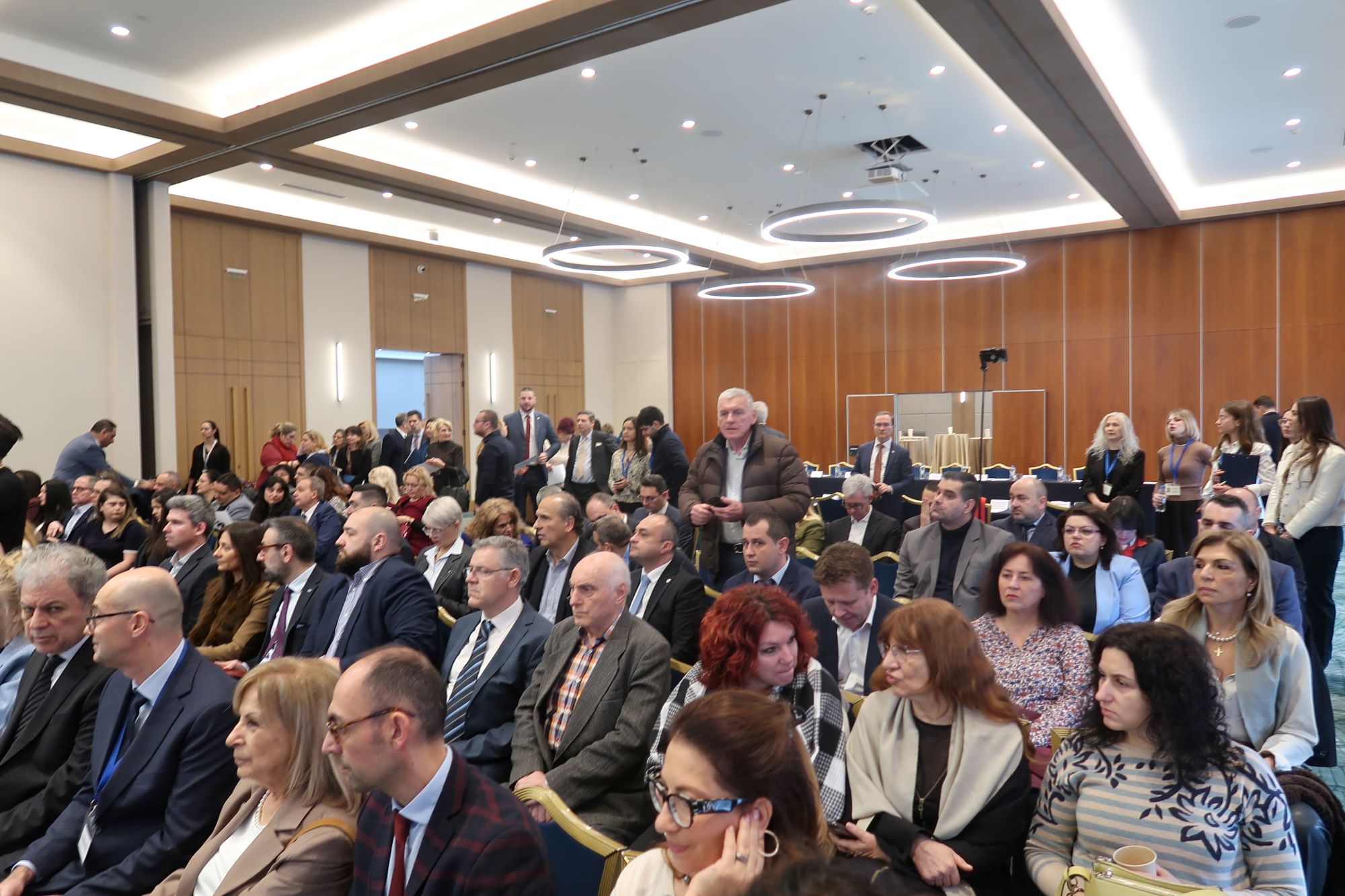
The President of the Bulgarian Chamber of Commerce and Industry (BCCI), Mr. Tsvetan Simeonov, welcomed the participants in the Bulgaria–Greece bilateral meeting, which is taking place this week in the Bulgarian capital with the participation of more than 40 Greek business representatives and nearly 180 Bulgarian companies. The event, organized by the Bulgarian–Greek Chamber of Commerce and Industry in partnership with the BCCI, forms part of an initiative of the Ministry of Macedonia and Thrace (Greece) aimed at holding regional meetings under the theme “Economic Cooperation between Bulgaria and Greece.” Representatives of manufacturing and business organizations, ports, local authorities, universities, and enterprises from both Bulgaria and Greece took part in the event.
Simeonov stated that the strong turnout at the event clearly demonstrates that bilateral cooperation between the two countries is on the right track.
With regard to the geopolitical environment, Mr. Simeonov emphasized the importance of the commitments undertaken within the framework of the Three Seas Initiative to develop logistics along the North–South axis. He noted that substantial development is also needed along the routes crossing the Black Sea, in view of the expected significant cargo flows to the Far East. According to him, alternatives — including in logistics — are essential for businesses to remain competitive.
Simeonov also commented on the fact that Bulgarians are acquiring a significant number of properties in Northern Greece, describing this as an expression of confidence in the bilateral relations. He noted that Bulgarian investors are allocating funds to renovate and make effective use of these properties, thereby contributing to the development of the bilateral tourism exchange.
The President of BCCI also highlighted that over 3,000 Greek companies are registered in Bulgaria, with around 900 of them being BCCI’s members, fully owned with Greek capital. He noted that this serves as an additional sign of confidence towards the Bulgarian economy.
The meeting in Sofia was opened in the presence of Konstantinos Goulecas, Deputy Minister of Interior of Greece for Macedonia and Thrace; Ivan Ivanov, outgoing Minister of Regional Development and Public Works of Bulgaria; Metodi Metodiev, outgoing Deputy Minister of Finance; and H.E. Marios Liberopoulos, Ambassador of Greece to Bulgaria.
Konstantinos Goulecas stressed that Greece is committed to further enhancing opportunities for cooperation with Bulgaria. He noted that the active exchanges between citizens of the two countries—including travel and youth education—forms a “bridge of friendship and cooperation” that should be reinforced. Speaking to the Bulgarian participants at the forum as “friends,” he underscored the significance of collaboration both bilaterally and in the broader context of Northern Greece’s development.
The Deputy Minister emphasized the numerous cooperation agreements signed between the two countries and highlighted energy as one of the key areas of cooperation. According to him, there are also several other sectors with potential for expanding the partnership, as evidenced by the broad profile of the members of the Greek delegation.
The outgoing Minister of Regional Development and Public Works, Ivan Ivanov, stated that the two countries share a common responsibility to accelerate the modernization of infrastructure, coordinate strategic projects, and maximize the use of European funding, which serves their mutual interests. He emphasized that, in recent years, Bulgaria has consistently invested in development along the north–south axis. The direct connection with Greece via the Struma Highway, although not yet fully completed, and the accompanying infrastructure to the border crossings significantly reduce travel time, enhance safety, and facilitate trade. At the same time, efforts are underway to modernize the routes through Makaza, Zlatograd, and Ilinden, which are of key importance for the development of the Rhodope region and Northern Greece.
According to Ivanov, joint work with Greece under European cross-border cooperation programs is also an important pillar for improving infrastructure, building trust, and fostering a shared vision for development. The funds under the INTERREG program between the two countries are aimed at enhancing public services, tourism, and the green transition. Currently, nearly 80 percent of the program’s budget has been activated, the outgoing Minister of Regional Development added. Ivanov stated that it is in the shared interest to allocate the entire financial resource of approximately €84 million in order to achieve results that benefit not only municipalities and businesses but also citizens.
The outgoing Deputy Minister of Finance, Metodi Metodiev, stated at the opening of the forum in Sofia that, from a geopolitical perspective, Bulgaria has made significant strides over the past two years in its full integration into the economic and monetary union, including joining the Schengen Area and the Eurozone. He noted that this will provide an additional strong impetus to bilateral relations with Greece, particularly in the areas of trade, services, tourism, and all other aspects of economic development.
Metodi Metodiev also noted that Greek direct investments in Bulgaria currently account for approximately 5.8% of total foreign direct investment in the country, highlighting that there is significant potential for growth in the coming years.
The President of the Bulgarian–Greek Chamber of Commerce and Industry, Savvas Karafylidis, announced that an international forum will be held in Thessaloniki on March 14, bringing together representatives of Greek and Bulgarian ports. He extended an invitation to those present to attend the event. “Ports are the lungs of the Balkans,” he stated. Hosting the event in Thessaloniki will provide an opportunity to further develop the contacts established during the meeting in Sofia.
Karafilidis added that from 1 to 5 June, the Bulgarian-Greek Chamber of Commerce and Industry (BGCCI) will co-organize the “Green Transition Forum” in Sofia, which will feature B2B meetings for private sector companies from Bulgaria, Greece, and Romania.
The forum featured thematic discussions among companies, representatives of business organizations, industry associations, regional chambers of commerce, universities, port authorities, as well as mayors and municipal representatives from both countries.
Representatives from the Investment Council of the Bulgarian Chamber of Commerce and Industry at BCCI, the regional chambers in Haskovo and Plovdiv, and other transport-related industry organizations actively participated in the event. The forum also hosted numerous bilateral meetings.