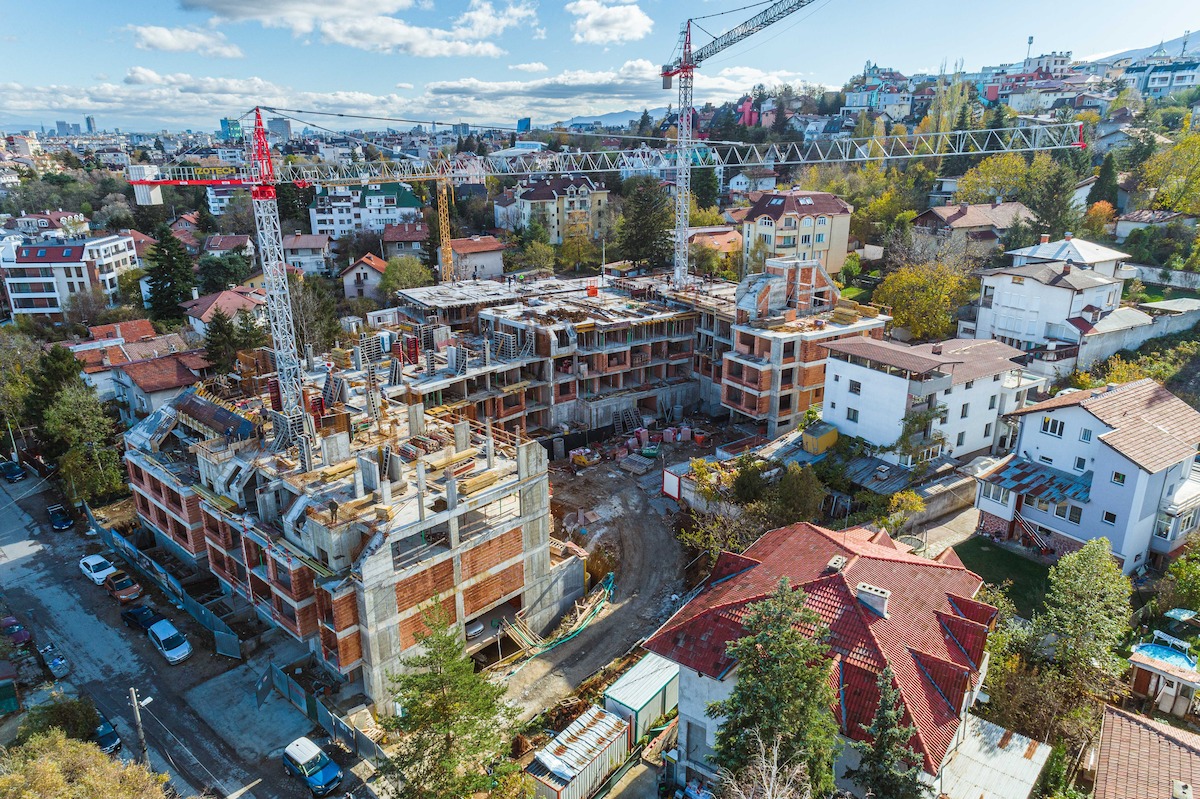
The two years of unprecedented boom, record transaction levels and speculative appreciation driven by the expectation of the euro are officially history. After Bulgaria entered the eurozone at a fixed exchange rate on January 1, 2026, the real estate market entered a new, much more balanced and mature cycle.
Data from the Bulgarian Registry Agency for the first months of the year report a decline in the number of transactions in Sofia by about 12.3% on an annual basis, which is a clear sign of cooling after the peak of the previous year. Interesting dynamics are also observed in price levels. For the first time in years, the average price of actually concluded transactions in the capital recorded a slight cosmetic decline at the beginning of the year – from €2,790 per sq m to around €2,680 per sq m.
However, the market remains stable, with forecasts for the whole of 2026 indicating moderate and healthy growth between 5% and 10%, which completely repeats the experience of other European countries after their accession to the monetary union.
This new reality has led to a serious restructuring of market participants and changed the profile of buyers. The rapid increase in prices in previous years has outpaced incomes, which has made people much more demanding, cautious and willing to negotiate for a long time for any discount.
The share of buyers who invested in housing simply to save their savings from inflation has halved, and currently properties are purchased mainly to meet real housing needs. At the same time, there is a wave of foreign owners, especially on the Black Sea coast and in mountain resorts, who, due to higher maintenance costs, decide to cash in on their investments, increasing the supply on the secondary market.
The main backbone of the sector remains bank lending, as interest rates on mortgage loans in euros remain at extremely favorable levels – on average between 2.3% and 2.8%. However, the market’s dependence on banks is growing, with the ratio of personal savings to loan capital now significantly in favor of loans.
In this situation, buyers already hold all the trump cards during negotiations. For properties with compromised quality, poor location or unresolved infrastructure, real discounts from the initially announced price during a transaction now regularly reach 10-12%.