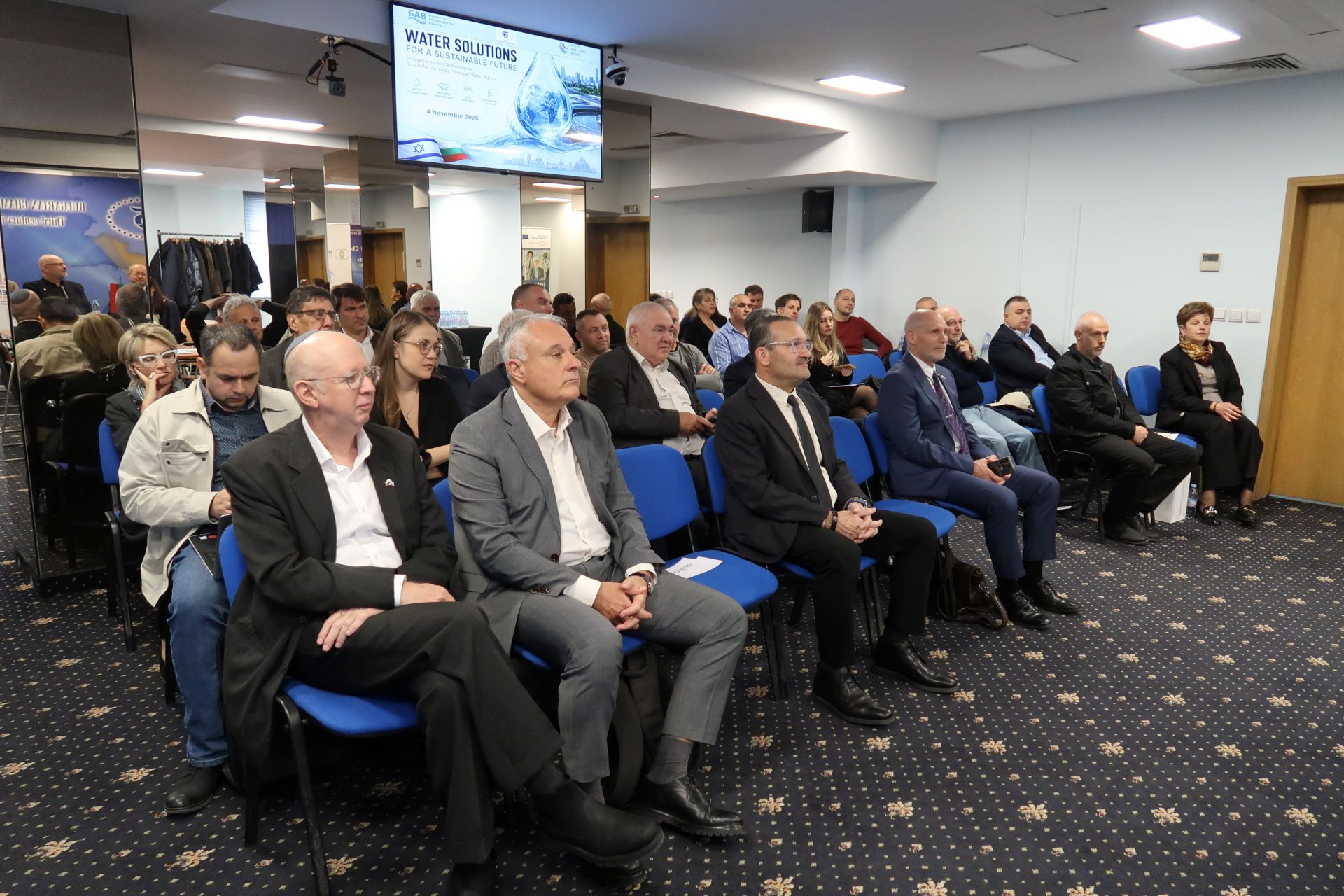
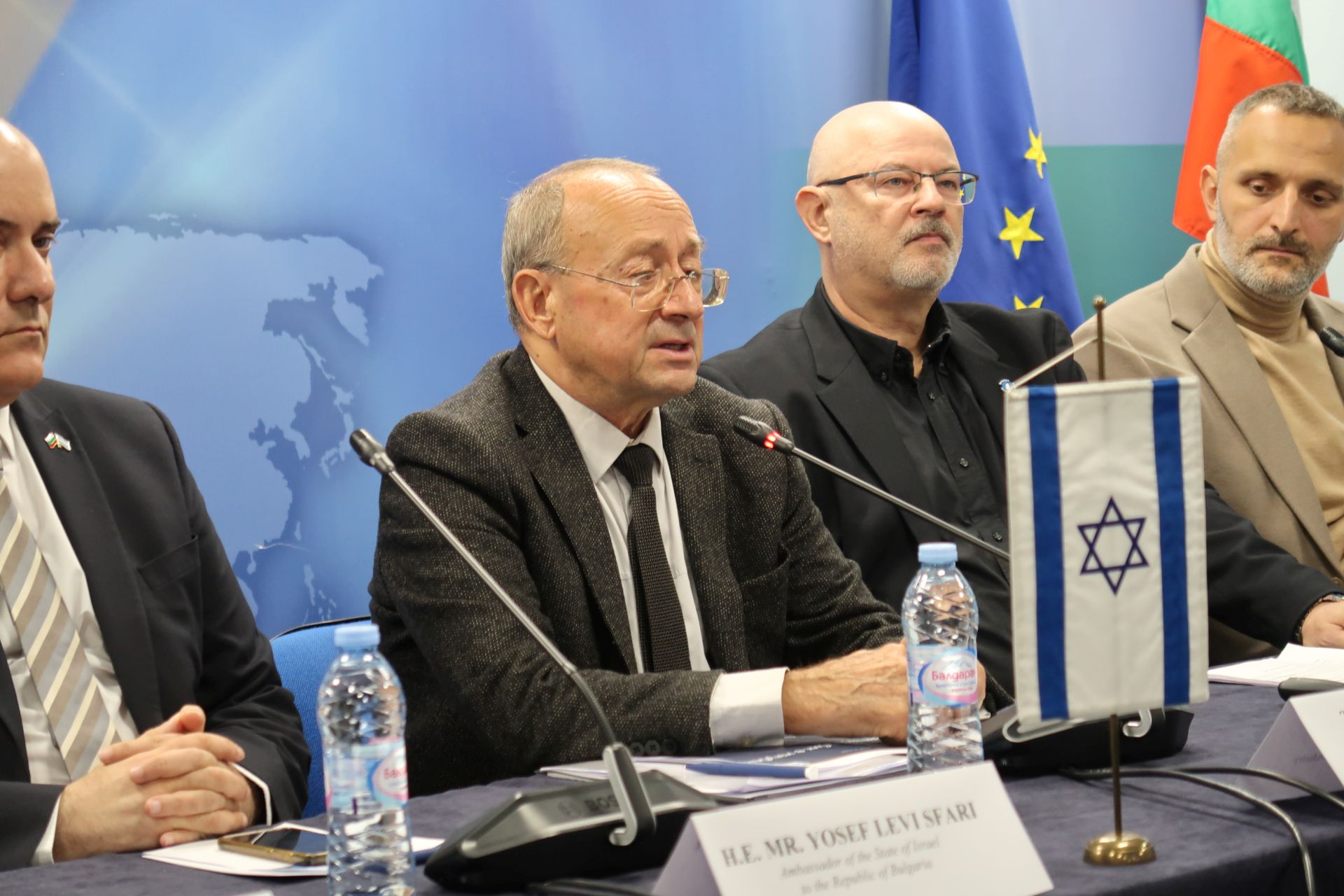
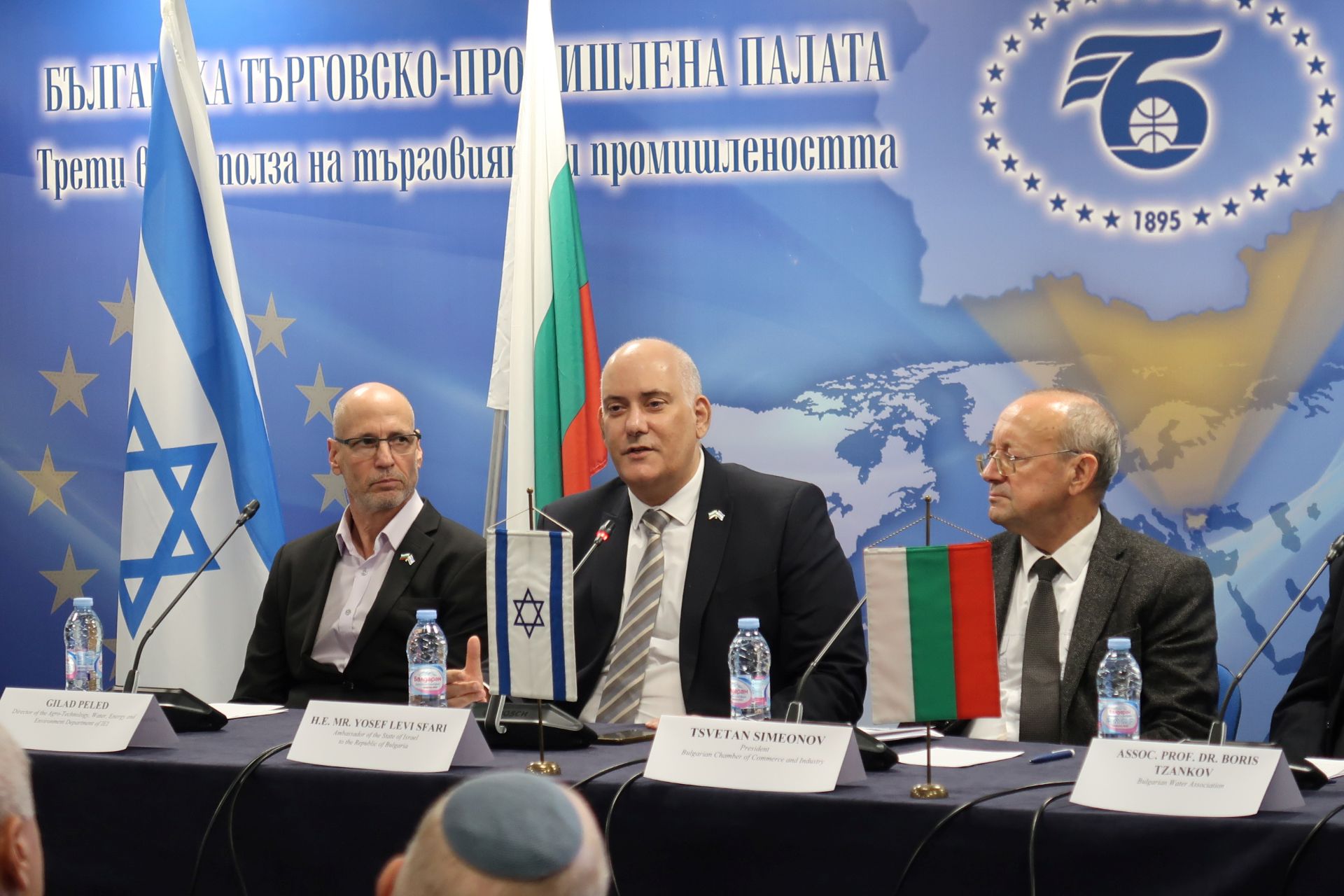
The Bulgarian Chamber of Commerce and Industry (BCCI) hosted a Bulgarian-Israeli business seminar titled "Water Solutions for a Sustainable Future." The event brought together representatives from the Bulgarian water sector, Israeli technology companies, and interested organizations to exchange expertise, present innovative solutions, and foster bilateral business cooperation.
The forum was opened by the President of BCCI, Mr. Tsvetan Simeonov, who emphasized that Bulgaria needs better water resource management. He stated that for a country blessed with abundant water, including mineral springs, losses exceeding 50% are unacceptable, making active cooperation among all stakeholders and institutions essential for achieving better results. He recalled that for years, BCCI has been seeking international collaboration—including with Israel—to improve the water supply network, noting that German experience in this field was also recently presented in Sofia.
The Ambassador of the State of Israel to Bulgaria, H.E. Yosef Levi Sfari, addressed the participants and highlighted that the event is a logical continuation of the signed bilateral cooperation agreement in the water sector. He explained that the document aims to encourage the exchange of best practices, technology sharing, improved water resource management, securing the water supply for the population, and environmental protection. The Ambassador expressed his gratitude to BCCI for its readiness to host the forum, which was initiated by the Israel Export Institute.
During the event, Assoc. Prof. Dr. Boris Tsankov from the Bulgarian Water Association presented the current status, key challenges, and development prospects of the water supply and sanitation sector in Bulgaria.
Gilad Peled, Director of the Agro-Technology, Water, Energy, and Environment Department at the Israel Export Institute, introduced the organization's activities to the attendees.
A special focus of the program was placed on innovative Israeli technologies for effective water resource management, loss reduction, and infrastructure modernization. Water loss in Israel stands between just 5% and 8%. Furthermore, the country relies on desalination technologies and the reuse of treated wastewater in agriculture.
Following the presentations, individual B2B meetings took place between representatives of the Israeli companies and interested entities from the Bulgarian public and private sectors. The meetings provided an opportunity to discuss specific technological solutions, future partnerships, and potential joint projects.
More than 50 representatives from various organizations across both countries participated in the forum.